What Causes Sun Dogs?
What causes sun dogs? Learn how ice crystals create these beautiful mock suns and how to spot and photograph them.
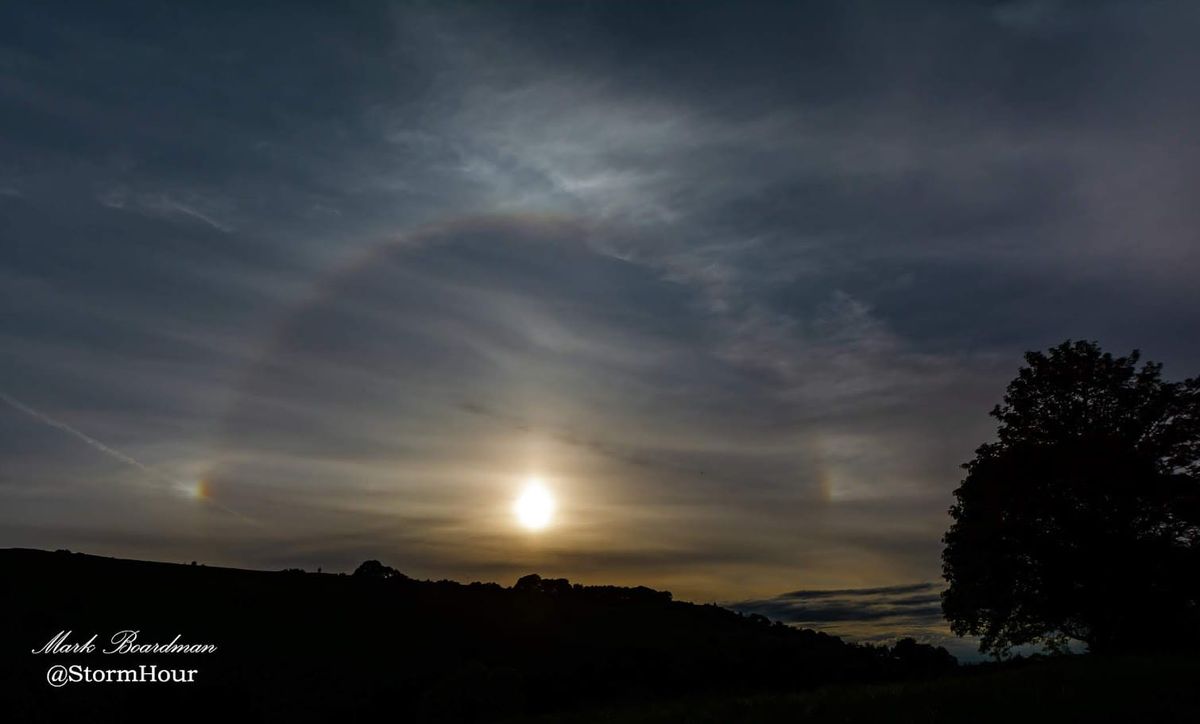
Sun dogs are bright spots of light that appear on either side of the Sun, often creating the illusion of multiple suns in the sky. They are caused when sunlight passes through tiny ice crystals suspended high in the atmosphere, usually within cirrus or cirrostratus clouds.
Also known as parhelia or mock suns, sun dogs are among the most beautiful atmospheric optical phenomena visible from Earth. They often appear during cold weather, but they can occur anywhere ice crystals are present high above the ground.
What Is a Sun Dog?
A sun dog appears as a bright, rainbow-tinted patch of light positioned roughly 22 degrees to the left or right of the Sun. In strong displays, two sun dogs may appear at the same time, creating a striking halo effect around the sky.
They are usually easiest to see when the Sun is low on the horizon, especially during sunrise or sunset.
Many people first notice sun dogs during winter, although they can occur in any season.
What Causes Sun Dogs?
Sun dogs form when sunlight is refracted through hexagonal ice crystals floating in high-altitude clouds.
These ice crystals act like tiny prisms. As sunlight enters one side of the crystal and exits through another, the light bends. Different wavelengths of light bend at slightly different angles, separating colours in a similar way to a rainbow.
The result is a concentrated patch of coloured light appearing about 22 degrees from the Sun.
The phenomenon occurs most commonly in:
- cirrus clouds
- cirrostratus clouds
- very cold air containing suspended ice crystals
The orientation of the crystals is important. Flat, plate-shaped ice crystals drifting horizontally through the atmosphere create the strongest and brightest sun dogs.
Why Are Sun Dogs Sometimes Colourful?
Sun dogs often show reddish colours closest to the Sun, fading into orange, yellow, and sometimes blue further outward.
This happens because red light bends less than blue light when passing through ice crystals. The colour separation is usually subtle but can become vivid during strong displays.
Unlike rainbows, sun dogs are typically more compact and concentrated in appearance.
Are Sun Dogs Rare?
Sun dogs are more common than many people realise.
They are simply overlooked because:
- people rarely look near the Sun
- displays are sometimes faint
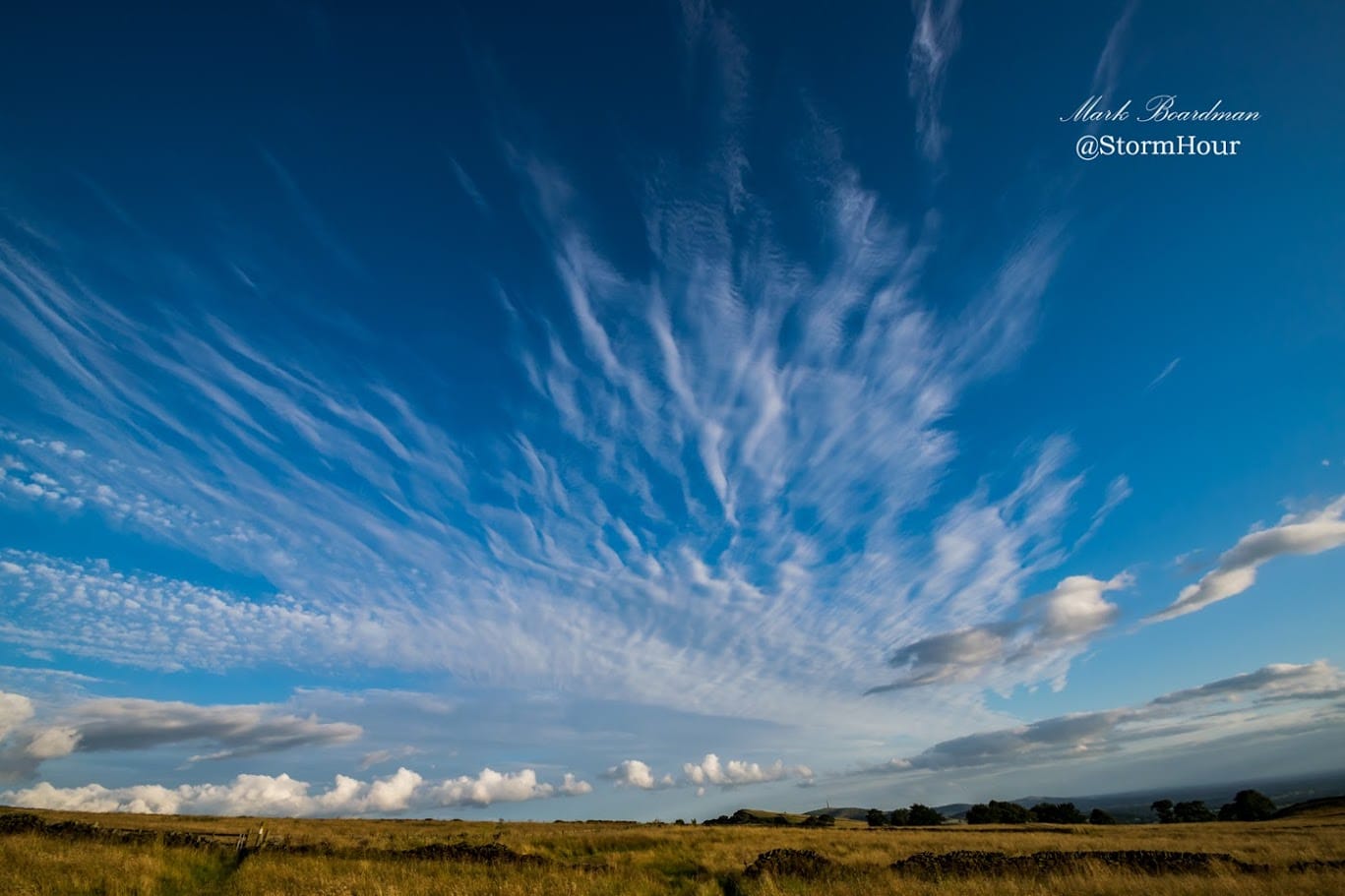
- thin cirrus cloud layers can go unnoticed
In colder climates, especially during winter, sun dogs can appear relatively frequently.
Storm observers and skywatchers often spot them ahead of approaching weather systems because cirrostratus clouds commonly form in advance of frontal systems.
What Weather Conditions Create Sun Dogs?
Sun dogs require two main ingredients:
- Sunlight
- Ice crystals in the atmosphere
The best conditions usually include:
- thin high clouds
- cold upper-atmosphere temperatures
- a low Sun angle
- calm atmospheric conditions allowing crystals to align horizontally
Sun dogs are especially common:
- during winter mornings and evenings
- before incoming warm fronts
- in polar and northern regions
- during freezing fog events
Can Sun Dogs Predict Weather?
Historically, sun dogs were sometimes viewed as weather signs.
While they do not directly predict storms, they often appear alongside cirrostratus clouds that can precede frontal systems and changing weather.
This means a sun dog may occasionally signal that rain or snow is approaching within the next day or so.
How to Photograph a Sun Dog
Sun dogs are extremely rewarding to photograph, especially when combined with dramatic landscapes or winter scenery.
Tips for Photographing Sun Dogs
- Use a wide-angle lens to capture the surrounding halo
- Partially block the Sun behind an object to reduce glare
- Slightly underexpose the image to preserve colour detail
- Shoot during sunrise or sunset when the Sun is lower
- Watch for accompanying halo phenomena nearby
Polarising filters can sometimes reduce visibility, so experiment carefully.
Related Atmospheric Phenomena
If you enjoy observing sun dogs, you may also encounter:
- 22-degree halos
- circumzenithal arcs
- light pillars
- iridescent clouds
- fogbows
- crepuscular rays
These phenomena all involve the interaction of sunlight with water droplets or ice crystals in the atmosphere.
Final Thoughts
Sun dogs are a reminder that some of the atmosphere’s most extraordinary displays happen quietly above us every day.
For weather photographers and skywatchers, they offer a perfect combination of science, beauty, and timing. Once you learn to recognise the conditions that produce them, you may begin noticing them far more often.
The next time thin high clouds drift across a cold sky, glance toward the Sun carefully — you might spot a second sun glowing beside it.
Further Reading
- What Causes Mammatus Clouds?
- Why Are Storm Clouds Green?
- Featured Meteorologist Brooke Brighton
- Browse Our Competition Archives
📩 Join StormHour (Free)
Get more from your weather photography.
Join StormHour for free and get instant access to:
- Photography prompts
- Camera settings cheat sheets
- Member-only downloads
- Future guides and resources
Already a member? Check your dashboard for the latest downloads.