Why Is the Sky Blue?
Discover why the sky appears blue, how Rayleigh scattering works, and why sunsets glow red and orange.
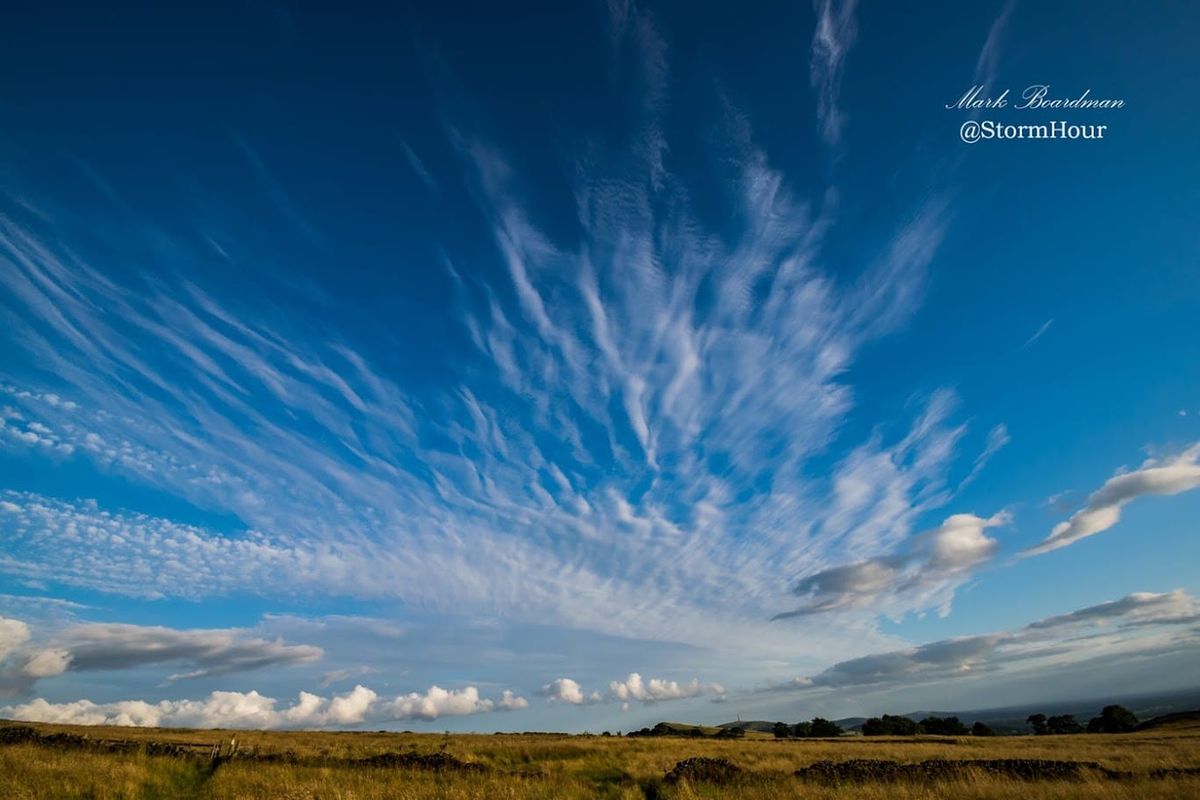
Have you ever looked up on a clear day and wondered why the sky appears blue? It's one of the most common questions about our atmosphere, and the answer lies in the way sunlight interacts with the gases surrounding our planet.
Although the explanation involves some fascinating physics, the basic idea is surprisingly simple: sunlight is made up of many colours, and Earth's atmosphere scatters some of those colours more effectively than others.
Sunlight Is Made of Many Colours
The light we receive from the Sun appears white, but it is actually a combination of all the colours of the visible spectrum. These colours range from red, orange and yellow through to green, blue, indigo and violet.
You can see these colours separated in a rainbow or when sunlight passes through a prism.
As sunlight travels through Earth's atmosphere, it encounters billions of tiny molecules of nitrogen and oxygen. These molecules affect different colours of light in different ways.
The Role of Rayleigh Scattering
The reason the sky appears blue is a phenomenon known as Rayleigh scattering.
Rayleigh scattering occurs when sunlight interacts with particles that are much smaller than the wavelength of visible light. The molecules that make up our atmosphere are perfect examples.
Shorter wavelengths of light, such as blue and violet, are scattered much more strongly than longer wavelengths like red and orange.
As sunlight enters the atmosphere, blue light is scattered in all directions. No matter where you look in the daytime sky, some of this scattered blue light is reaching your eyes.
This is why the sky appears blue above us.
Why Isn't the Sky Violet?
If violet light is scattered even more strongly than blue light, why doesn't the sky look violet?
There are several reasons:
- The Sun emits slightly less violet light than blue light.
- Human eyes are more sensitive to blue wavelengths than violet ones.
- Some violet light is absorbed in the upper atmosphere.
When these factors are combined, the scattered light we perceive is predominantly blue.
Why Does the Sky Sometimes Look Darker Blue?
The shade of blue can vary depending on atmospheric conditions.
A deep, dark blue sky is often seen at higher altitudes where the air is thinner and contains fewer particles such as dust, smoke and water vapour.
In contrast, a pale or milky blue sky often indicates that additional particles are present in the atmosphere. These particles scatter light differently and can reduce the intensity of the blue colour.
Photographers frequently notice this effect when comparing mountain landscapes with scenes captured at sea level.
Why Is the Sky Blue on Earth but Black in Space?
The atmosphere is the key difference.
Space contains very few molecules capable of scattering sunlight. Without atmospheric scattering, there is no blue light being redirected across the sky.
As a result, astronauts in orbit see a black sky even while the Sun is shining brightly.
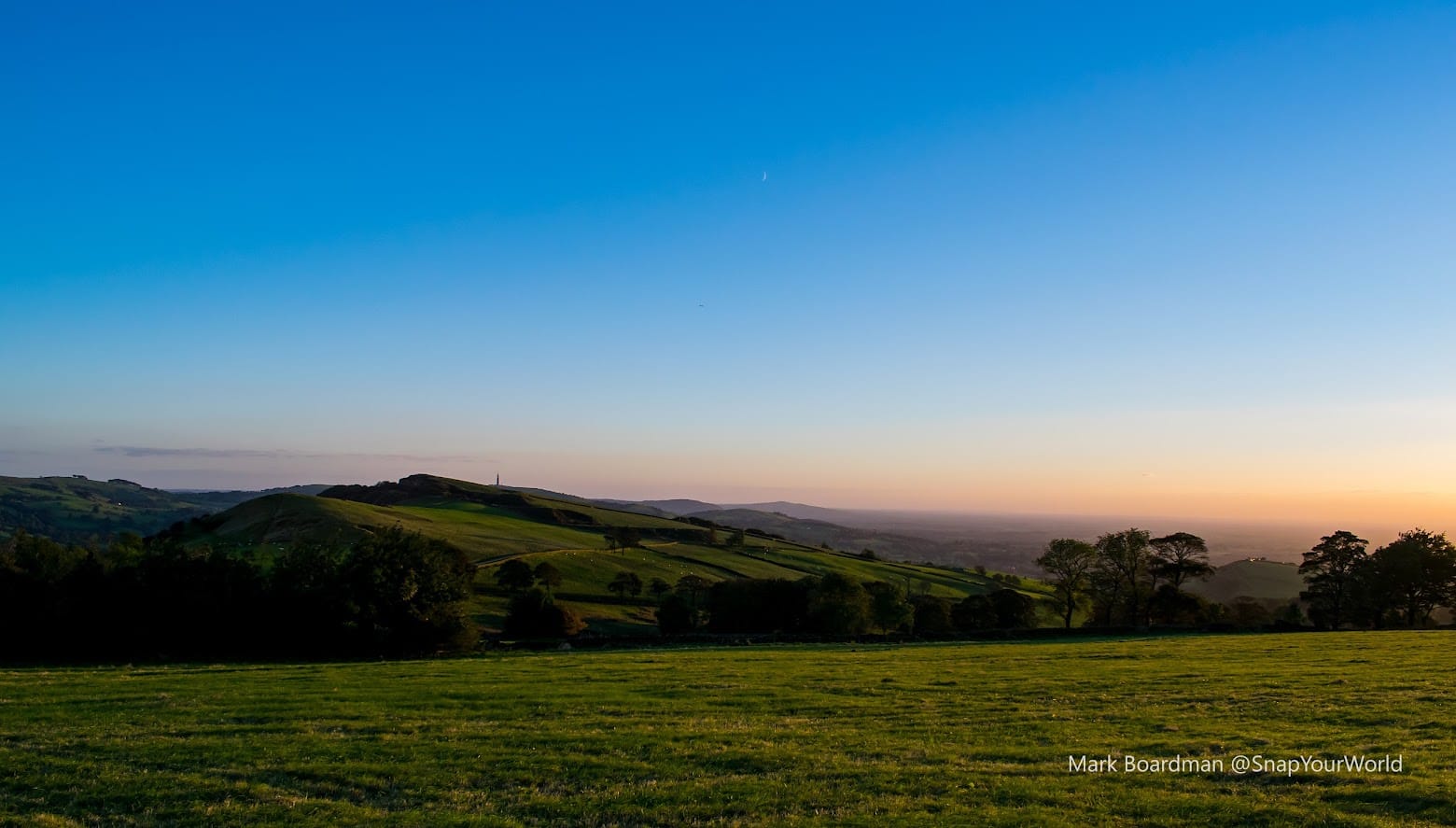
Why Do Sunsets Turn Red?
The same process that makes the daytime sky blue also creates colourful sunsets.
When the Sun is low on the horizon, sunlight must travel through a much greater thickness of atmosphere before reaching your eyes.
Most of the shorter blue wavelengths are scattered away before the light reaches you. The remaining light is richer in longer red, orange and yellow wavelengths, producing the vibrant colours often seen at sunrise and sunset.
This is why some of the most spectacular skies occur when the Sun is near the horizon.
Frequently Asked Questions
Is the sky actually blue?
Not exactly. The atmosphere itself is colourless. The blue appearance is created by the scattering of sunlight by air molecules.
Would the sky be blue on another planet?
Not necessarily. The colour of a planet's sky depends on the composition and density of its atmosphere. For example, Mars often appears reddish-brown because of dust particles suspended in its thin atmosphere.
Why does the sky sometimes look white?
When the atmosphere contains large amounts of water droplets, haze, smoke or pollution, light is scattered more evenly across the visible spectrum. This can make the sky appear pale blue, grey or even white.
The Science Behind Every Blue Sky
The next time you look up on a clear day, you're seeing one of nature's most elegant demonstrations of physics.
The sky appears blue because molecules in Earth's atmosphere scatter shorter blue wavelengths of sunlight more effectively than longer wavelengths. This process, known as Rayleigh scattering, fills the sky with blue light from every direction.
It's a simple explanation with a remarkable result: one of the most familiar sights on our planet is actually the product of sunlight, atmospheric chemistry and the physics of light working together.
Further Reading
- What Causes Sun Dogs?
- Polar Vortex Weakening: Sudden Stratospheric Warming Explained
- Featured Meteorologist Alex Kirchner
📩 Join StormHour (Free)
Get more from your weather photography.
Join StormHour for free and get instant access to:
- Photography prompts
- Camera settings cheat sheets
- Member-only downloads
- Future guides and resources
Already a member? Check your dashboard for the latest downloads.